
America at 250: Freedom, Service, and the Work We Carry Forward
THE PRESIDENTIAL GAZETTE
Stories of Service, Leadership, and National Progress
Published by the Presidential Service Badge Foundation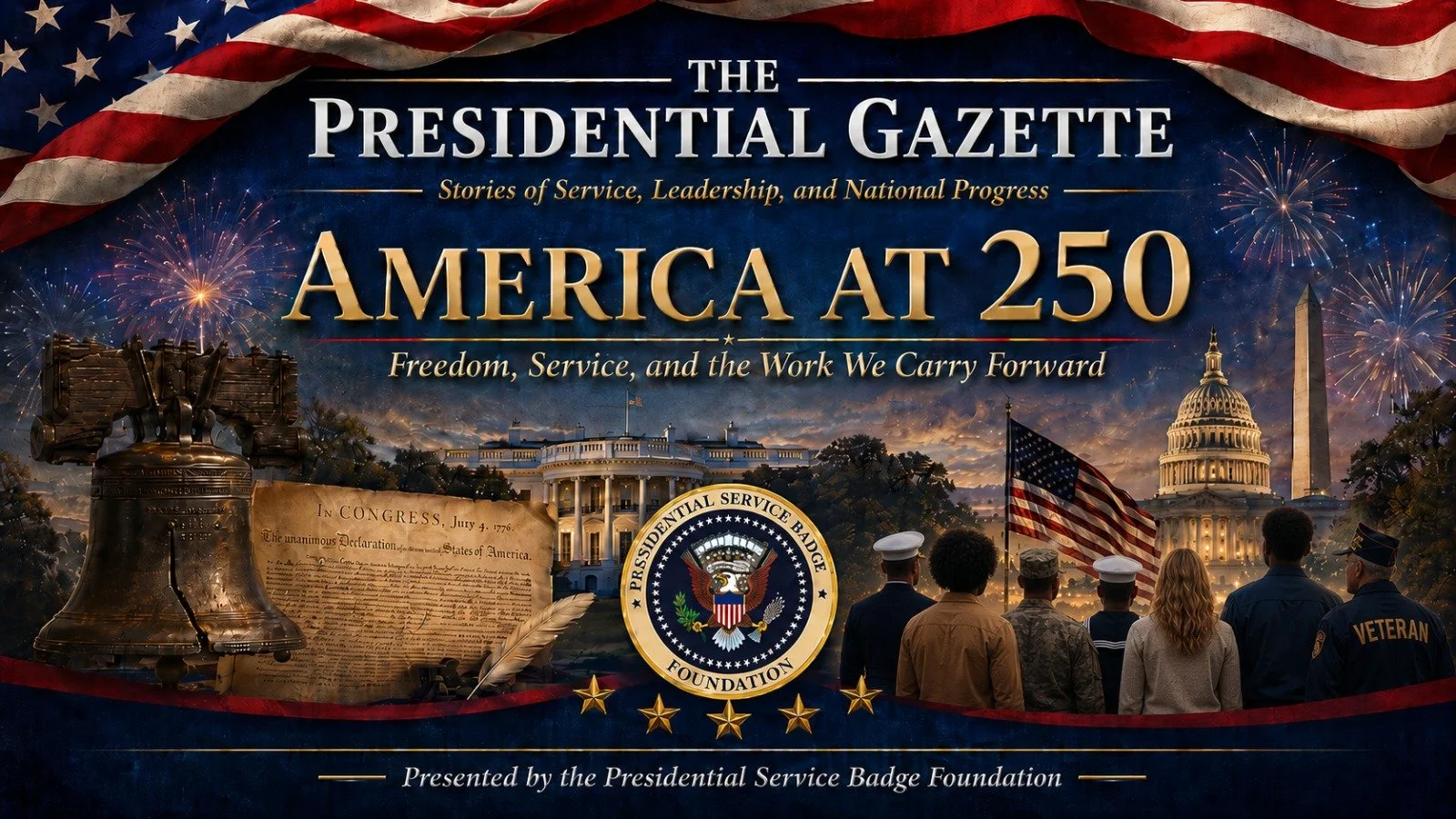
This Fourth of July, America stands at a remarkable milestone: 250 years since the Continental Congress adopted the Declaration of Independence on July 4, 1776.
There will be flags waving from porches, parades moving through hometown streets, families gathered around grills, music in the air, and fireworks brightening the night sky. These traditions matter. They bring us together across generations and remind us that, despite our differences, we share a national story.
But this year asks us to pause for something deeper.
America at 250 is not merely a birthday celebration. It is an invitation to reflect on the ideals that gave birth to a nation, the sacrifices that defended those ideals, the unfinished work still before us, and the responsibility each generation carries to preserve liberty with wisdom, courage, and care.
What Started the Revolution?
The American Revolution did not begin because of one disagreement or one tax. It grew out of years of rising tension between Great Britain and its American colonies.
After the French and Indian War ended in 1763, Britain faced major debt and sought greater control over the colonies through new taxes, trade restrictions, and military enforcement. Measures such as the Stamp Act, the Townshend Acts, and later the Tea Act created outrage among many colonists who believed they were being governed without representation in Parliament.
The phrase “no taxation without representation” became more than a slogan. It reflected a growing conviction that government should not rule people without their consent.
By April 1775, the conflict had moved from political debate to armed confrontation at Lexington and Concord. The following year, after Congress voted for independence on July 2, the Declaration of Independence was adopted on July 4, 1776.
The document did not end the war. It gave the struggle its moral language.
It declared that people possess inherent rights, that governments derive authority from the consent of the governed, and that liberty is not a gift handed down from a ruler. It is a human responsibility that must be guarded, practiced, and defended.
Remembering Crispus Attucks
Before independence was declared on July 4, 1776, Crispus Attucks became one of the first Americans to lose his life in the struggle that helped ignite the Revolution. Killed during the Boston Massacre on March 5, 1770, he became a powerful symbol of resistance and sacrifice on the road to American independence.
Watch: Crispus Attucks and the Boston Massacre | Black American Heroes | HISTORY
A Celebration That Requires Honest Reflection
The ideals expressed in the Declaration were bold, revolutionary, and world-changing. They also existed alongside realities that did not yet reflect those ideals.
Enslavement continued. Women were denied equal political standing. Black Americans, Indigenous nations, and many others faced exclusion, danger, and injustice in a nation that had declared liberty as a founding principle.
A mature patriotism does not avoid those truths. It faces them.
To honor America honestly is not to pretend the nation has always lived perfectly by its highest values. It is to recognize that the promise of liberty has challenged every generation to expand justice, protect dignity, and move closer to the principles first placed on paper in 1776.
The Fourth of July is therefore both a celebration and a responsibility. It is a reminder that freedom must never become a decorative word. It must be lived through civic participation, respect for one another, service to the community, and a willingness to protect the rights and dignity of others.
Veterans: The Human Cost of Freedom
For the Presidential Service Badge Foundation, any reflection on Independence Day must include the men and women who have served in defense of this country.
The American story of service began before the United States was fully formed. Continental Army soldiers, militia members, sailors, laborers, nurses, messengers, and families all carried the weight of a revolution whose outcome was far from certain. Many endured separation from loved ones, physical hardship, hunger, injury, loss, and years of uncertainty.
Freedom was not secured by words alone. It was defended by people.
The connection between independence and the care of those who served was established early. In August 1776, the Continental Congress authorized pensions for soldiers who became disabled while serving in the Revolutionary War. From the very beginning, the nation recognized that service carries a cost, and that those who bear that cost deserve more than applause. They deserve remembrance, respect, and tangible support.
That principle still matters.
Our veterans are not simply part of our history. They are part of our present communities, our families, our workplaces, our places of worship, and our neighborhoods. They carry stories of courage, sacrifice, leadership, resilience, and service that deserve to be heard and preserved.
This Independence Day, let us remember that honoring veterans is not limited to a holiday message. It means learning their stories. It means recognizing military families. It means creating room for veterans to lead, contribute, heal, and be remembered with dignity.
Service is not a footnote in the American story. It is one of its strongest threads.
What Does America at 250 Ask of Us?
Perhaps the question for this anniversary is not simply “What are we celebrating?”
Perhaps the better question is, “What are we carrying forward?”
We carry forward the courage of those who believed a new nation was possible. We carry forward the responsibility to protect the freedoms that generations before us fought to preserve. We carry forward the obligation to tell the truth about our history, including its victories, its wounds, and its ongoing work.
We also carry forward the opportunity to serve.
This year, families can make the Fourth of July more meaningful by reading a portion of the Declaration of Independence together, visiting a historic site, attending a community ceremony, learning about a local veteran, or simply opening a conversation with younger generations about what freedom means in daily life.
Beyond the Fireworks
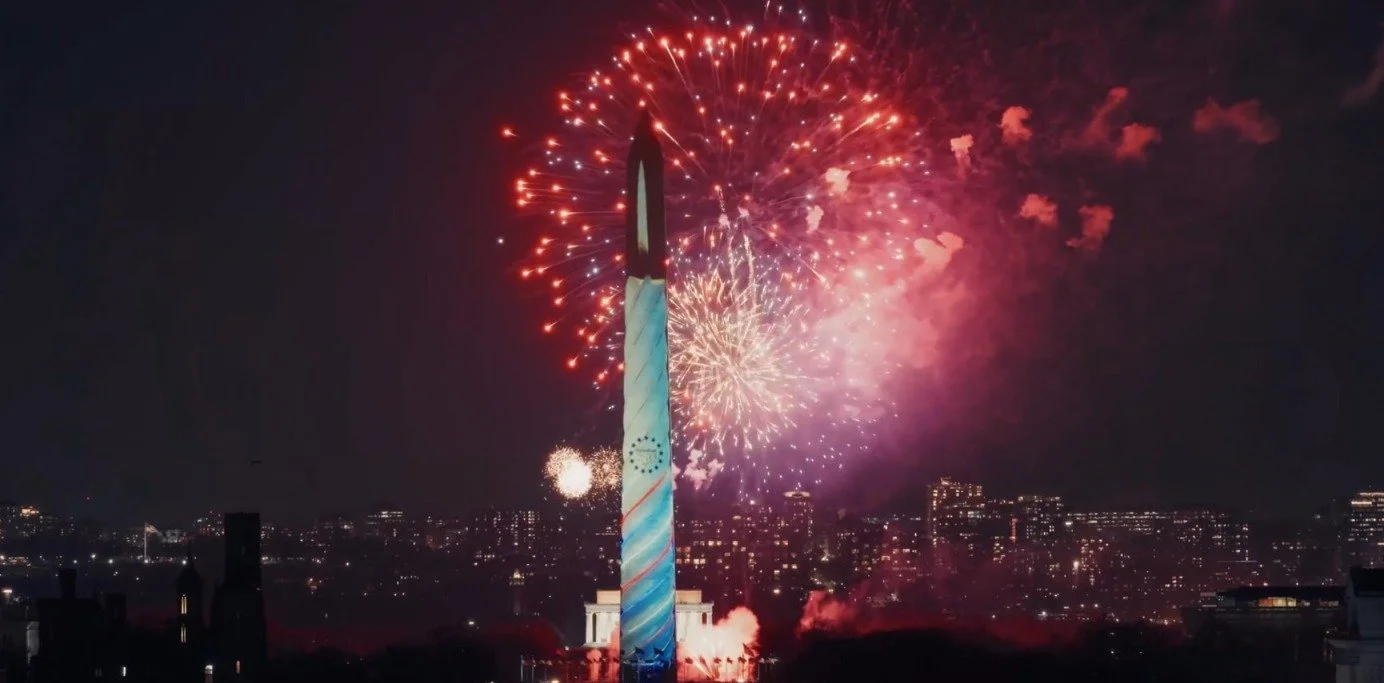
Fireworks are a cherished part of Independence Day. They bring families and communities together in a bright and joyful display of celebration.
Yet for some veterans, the sudden blasts, flashing lights, and unexpected noise can be deeply distressing. Fireworks may serve as trauma reminders for those living with post-traumatic stress or memories connected to combat, explosions, gunfire, or other life-threatening experiences.
This is an important reminder that patriotism can look different from person to person. For one neighbor, fireworks may represent celebration. For another, they may bring anxiety, flashbacks, heightened alertness, or a difficult night of reliving experiences they never asked to carry.
As we celebrate, let us also lead with awareness and compassion. Consider giving neighbors advance notice before setting off personal fireworks, respecting quiet spaces, and checking in on veterans or loved ones who may need support during the holiday.
If you are a veteran affected by fireworks or know someone who is, please visit the Presidential Service Badge Foundation’s Mental Wellness Support resource page for guidance and support:

No one should feel they must face those moments alone.
Fireworks are beautiful, but they are not the whole sentence.
The fuller meaning of Independence Day is found in remembrance, gratitude, service, and stewardship. It is found in the decision to leave our communities stronger than we found them. It is found in honoring those who gave of themselves so that others might live with greater liberty.
Carry the Legacy Forward
At 250 years, America remains a work in progress.
That is not a weakness. It is a call to action.
The Declaration of Independence gave the nation a set of ideals. The generations that followed were tasked with bringing those ideals to life. Now, that responsibility belongs to us.
This Fourth of July, let us celebrate with gratitude. Let us remember with honesty. Let us honor our veterans with purpose. And let us move forward with the understanding that freedom is not only an inheritance.
It is a legacy we are responsible for protecting.
Stay Connected: America at 250
As our nation commemorates 250 years of independence, stay informed, stay engaged, and celebrate with America.
Explore official stories, videos, historic milestones, and national anniversary events through the White House Freedom 250 initiative. It is a meaningful resource for families, educators, veterans, and citizens who want to remain connected to this once-in-a-generation moment in American history.
Visit: Freedom 250 to stay in the know and celebrate America’s 250th anniversary
Support the Mission
The Presidential Service Badge Foundation is committed to honoring service, uplifting veterans, strengthening communities, and preserving the values that connect us as a nation.
Your support helps expand meaningful resources, recognition, and opportunities for those whose lives have been shaped by service. As America reflects on 250 years of independence, every contribution becomes part of the continued work of remembrance, responsibility, and national progress.
To support the mission of the Presidential Service Badge Foundation, please consider donating:
Thank you for standing with those who have served and for investing in a legacy of purpose.
The Presidential Gazette is a nonpartisan publication of the Presidential Service Badge Foundation, dedicated to honoring service, strengthening community, and advancing meaningful national progress.
The Presidential Service Badge Foundation is a recognized 501(c)(3) nonprofit organization. Contributions may be tax-deductible as permitted by law.
Written by the Presidential Service Badge FoundationCopyright © 2026 Presidential Service Badge Foundation. All rights reserved. All content and publication materials are the property of the Presidential Service Badge Foundation and may not be reproduced without permission.